After Light
Pixel Art • Programming • Processing Development • Early Game Prototyping
Summary
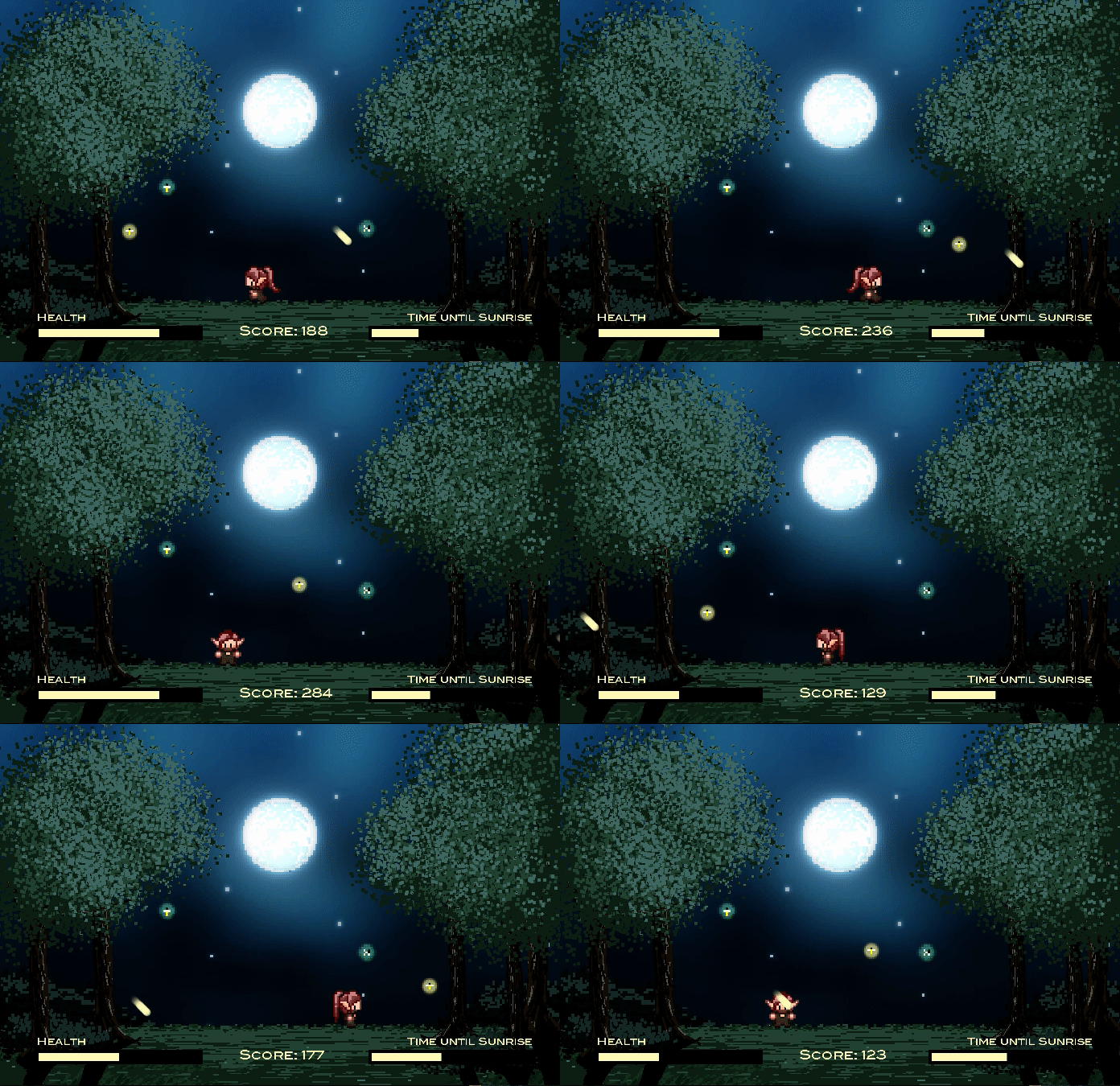
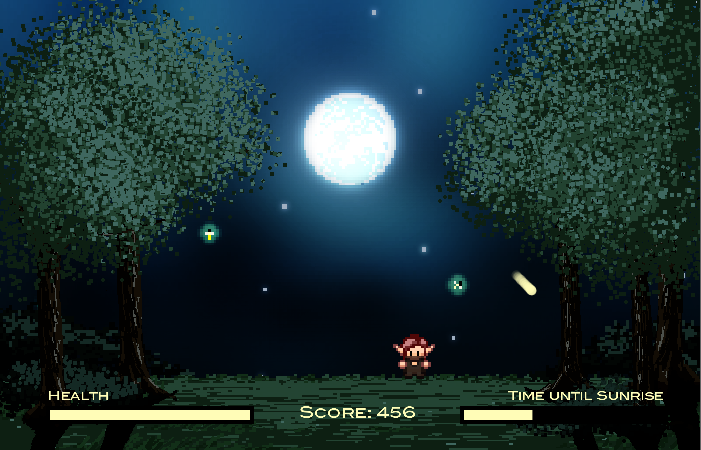
After Light is one of the earliest games I created in Processing, and it was my first time integrating my own hand-drawn pixel art into a playable prototype. The player controls a small elf who runs toward the player’s mouse cursor on the X-axis, creating the playful illusion that she is chasing a glowing firefly.
Meanwhile, shooting stars crash down around her, and the “firefly” (the player) must guide her away from danger and keep her safe until sunrise.
This project helped me explore the relationship between player intent, character responsiveness, environmental danger, and visual atmosphere, all while learning the foundations of building games from scratch.
Project Overview
After Light was created as part of an early graduate school assignment focused on understanding:
How to implement simple cursor-based movement logic
How to create escalating tension using ** environmental hazards**
How atmosphere and visual style affect game feel
How to build a complete game loop with start screen → gameplay → survival → outcome
I built all systems manually in Processing, including movement, collision detection, rendering, and UI elements.
Tools Used
Processing (Java) – game logic, animation, rendering
Photoshop – sprite art and background painting
What I Worked On
Programming & Gameplay Systems
Implemented cursor-follow movement (elf moves toward mouse X-position)
Coded falling-star hazards: spawn timing, random variation, collision detection
Built health, scoring, and “time until sunrise” survival systems
Implemented win/lose conditions tied to sunrise and player health
Created start screen, transitions, and restart flow
Design
Designed the core loop: survive the night by avoiding falling stars
Balanced star frequency and speed for tension
Focused on creating a calming but dangerous atmosphere through color and movement
Art & Animation
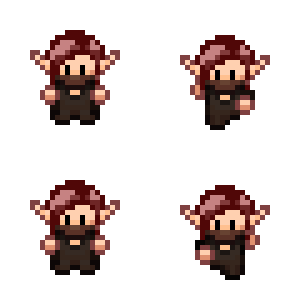
Created all pixel-art assets, including:
Elf character
Firefly glow effects
Moon, trees, and background environment
UI bars, title screen, and decorative elements
Learned how to integrate sprites into Processing without animation tools
What I Learned
This project taught me:
How to combine my own art with game systems for the first time
How to implement cursor-based movement and basic collision detection
How atmosphere and visuals can transform a simple prototype
How tension can be created with a single interaction: avoid
How satisfying it is to see self-drawn pixel art come alive on screen
Early lessons in pacing, responsiveness, and readable hazard design
After Light became a meaningful milestone — the moment I learned not just how to make a game, but how to make a game that feels alive.
Personal Reflection
After Light is a project I look back on with a lot of affection. It was the first time I truly saw my own drawings become a moving, playable world. I’ll never forget the joy of watching the elf’s tiny pixels slide across the moonlit forest, or the soft glow of the firefly guiding her through danger.
It also taught me the magic of indirect control: letting the player influence a character without piloting them directly. Even in this tiny prototype, that idea planted the seed for many of the empathetic and character-driven systems I would explore later in my career.
Most importantly, After Light helped me realize something important:
I didn’t just enjoy making games — I was capable of making them, completely from scratch.