Fate
Pixel Art • Programming • Processing Development • Early Game Prototyping
Summary
Fate is a minimalist, experimental game created in Processing.js (2014) during the same period as After Light. This project represents your first deep dive into visual experimentation, specifically exploring what happens when a game removes traditional color and relies instead on value, contrast, and motion to communicate mood and meaning.
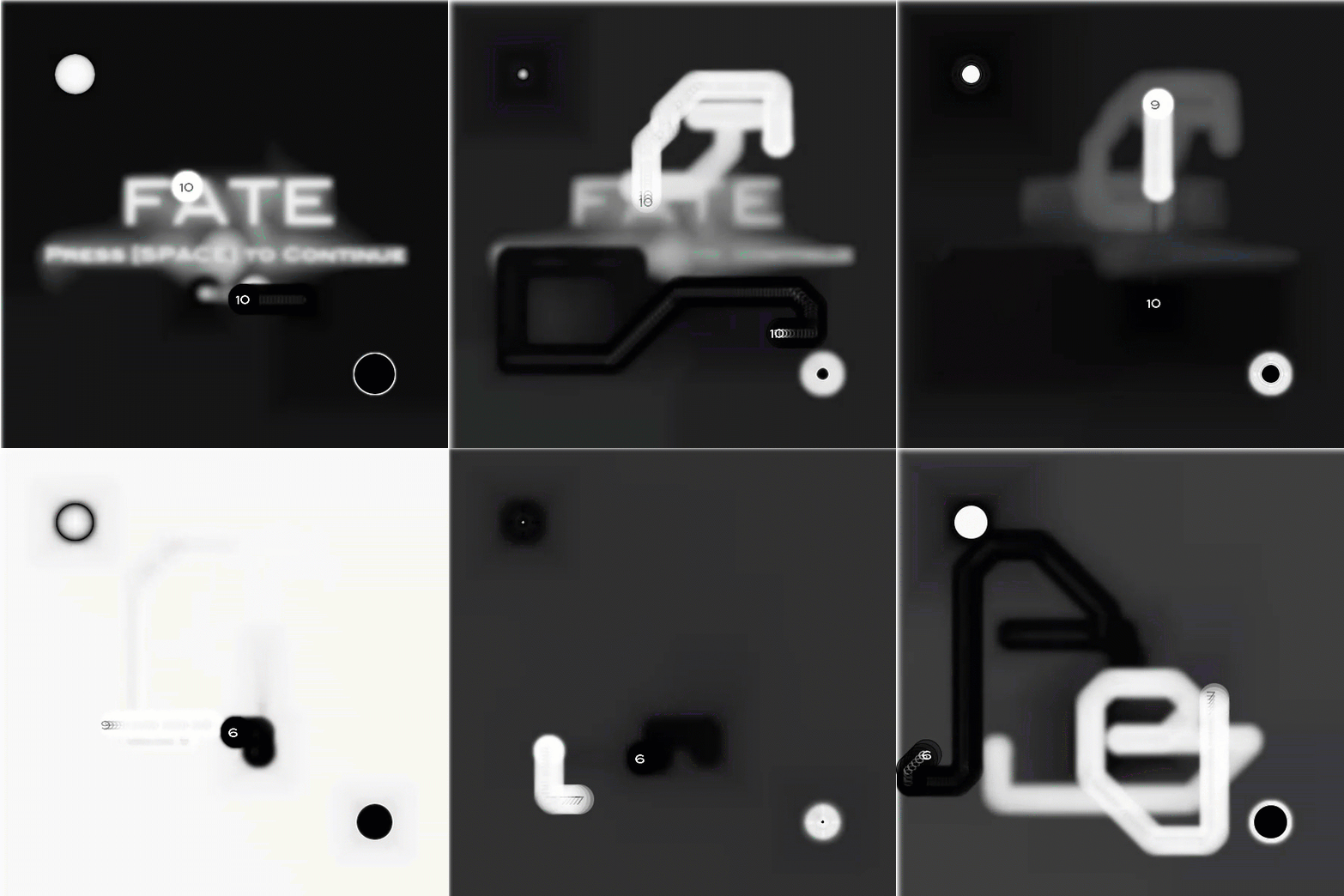
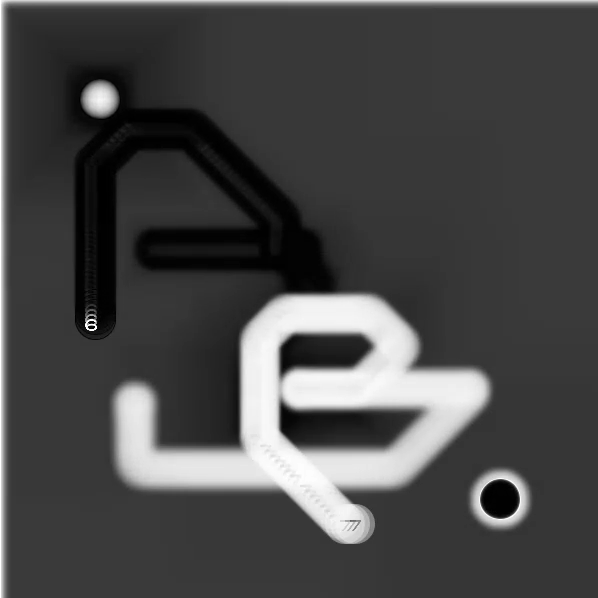
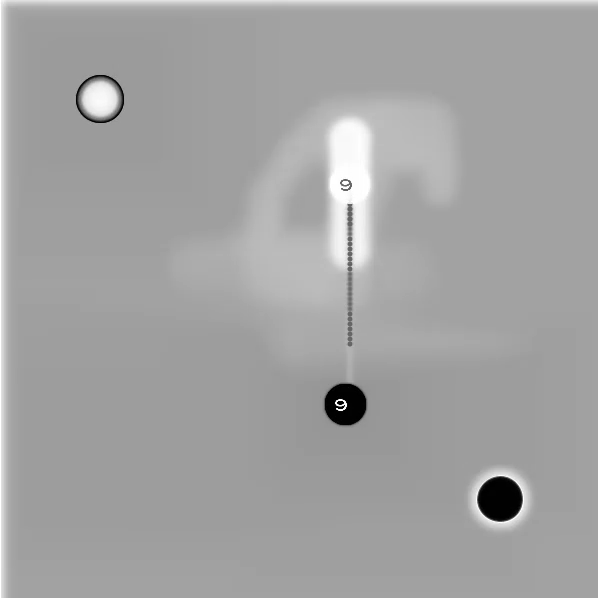
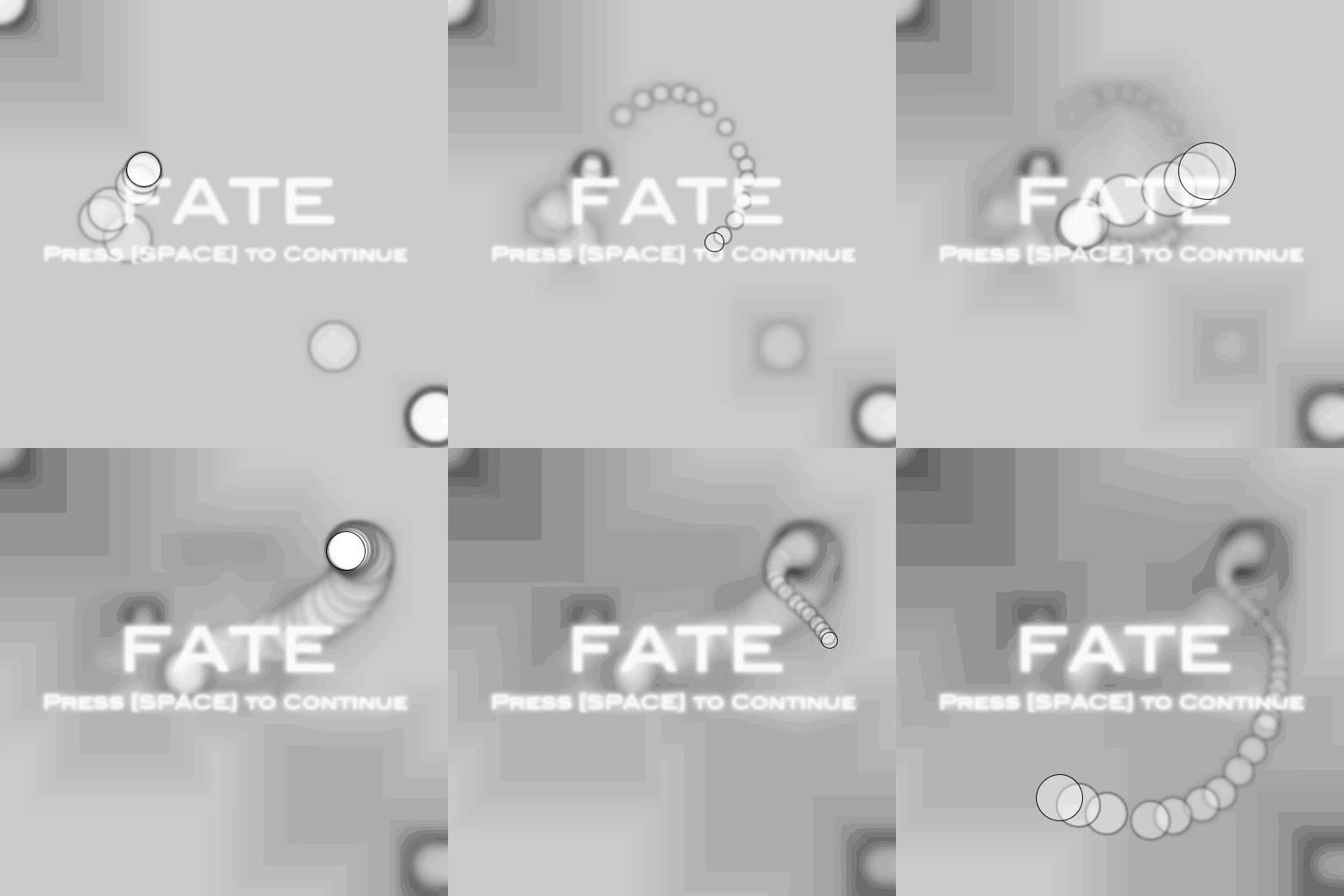
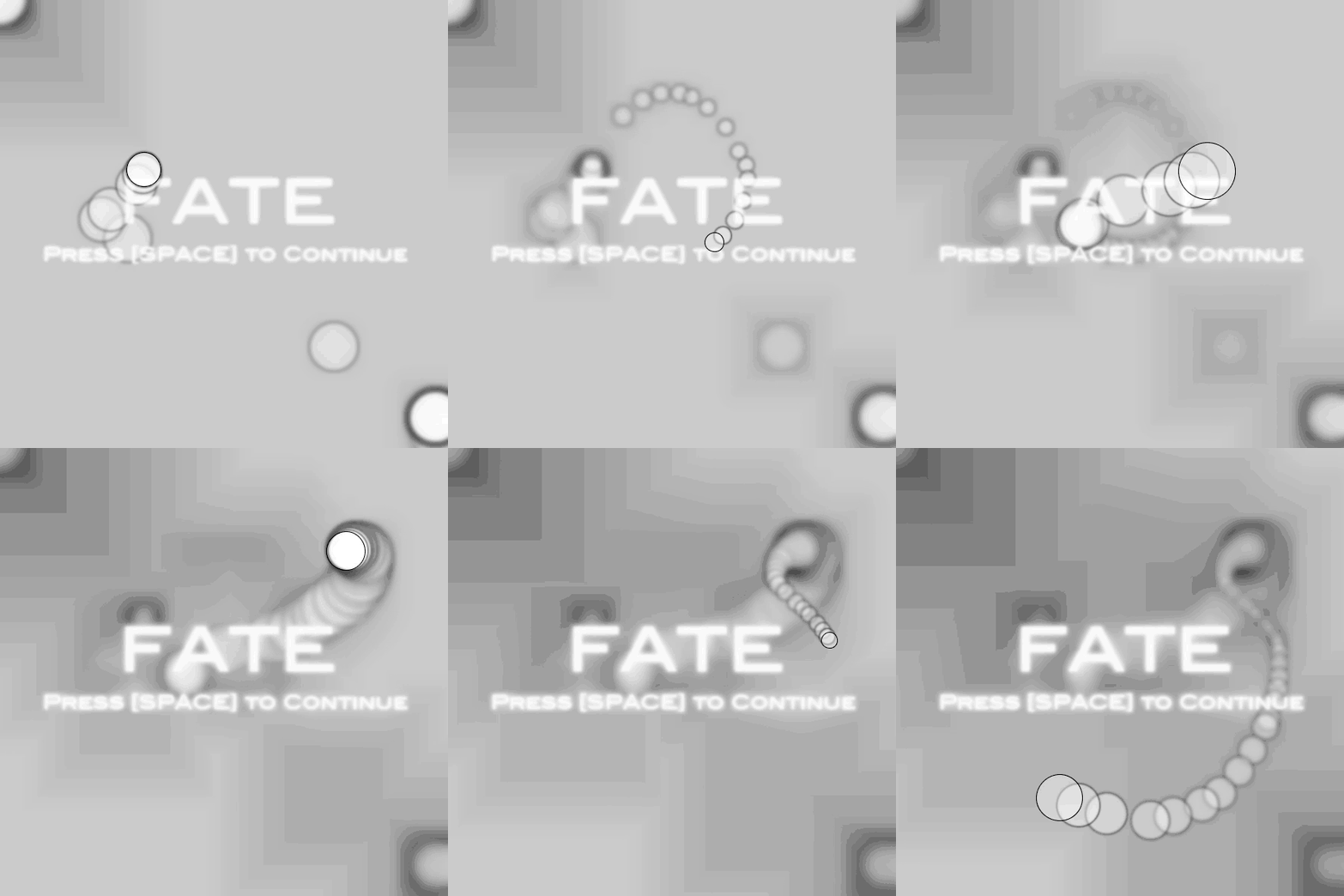
What began as a simple two-player prototype became a strangely poetic interaction: two opposing spheres, one black and one white, drifting through a soft grayscale void. Their presence stains the world behind them. Their actions permanently alter the canvas. The game is less about winning and more about watching the world slowly transform.
Fate marked a significant moment in your early development career — the first time your programming skills had grown enough for you to confidently experiment with filters, blending modes, and emergent visual systems. It’s a quiet but important milestone, showing your early curiosity about how mechanics and aesthetics can merge into a single expressive system.
Project Overview
Fate is a competitive two-player game with a simple core loop:
Move through the environment, leaving a persistent trail of your color value (white or black).
Fire pulses that push your color outward, bleaching or darkening nearby space.
Dominate the void by allowing your color influence to spread farther and linger longer.
What makes Fate unique is how the world becomes a record of player behavior. No match looks the same twice. Trails smear, blur, and bleed, gradually creating abstract paintings of each duel.
The system emerged from your desire to see whether mechanics could exist as art, using only motion and contrast to evoke emotion.
Tools Used
Processing (Java) – game logic, animation, rendering
Photoshop – sprite art and background painting
What I Worked On
Core Mechanics & Controls
Persistent trail system that leaves behind a visual “history” of player movement
Pulse mechanic that expands color influence outward using timed grayscale spreading
Collision & influence logic determining which color dominates overlapping areas
Systems & Implementation
Two-player input system:
White Sphere — WASD + Left Shift
Black Sphere — Arrow Keys + “/”
Lightweight state management for resetting, redrawing, and resolving each match
Eye-catching reactive visuals enabling the game to function as both play system and visualizer
Visual & Rendering Experiments
Early use of Processing.js filters, blur, transparency, and additive/subtractive blending
Procedural generation of visual artifacts shaped by player interactions
A fully grayscale aesthetic that responds dynamically to player choice
What I Learned
This project helped solidify your early programming abilities, especially in:
Experimenting with nontraditional aesthetics to drive gameplay
Thinking in systems and cause-and-effect loops, rather than scripted sequences
Understanding the impact of feedback design, even in minimalist projects
Building confidence in your ability to:
Implement your own mechanics
Explore experimental game design
Push beyond requirements and trust your creative instincts
Fate played an important role in showing you that small experiments can be meaningful — a theme that carried into many of your later works.
Personal Reflection
Looking back, Fate remains one of the simplest games I’ve ever made, but also one of the most meaningful. At the time, I had just begun feeling confident in my programming skills, and Fate marked the first moment where I allowed myself to create something purely experimental — not for a grade, not for a structured assignment, but because I was genuinely curious about what might happen if I stripped a game down to its bare essentials.
Working entirely in grayscale forced me to think differently. Without color to rely on, I had to use contrast, gradients, motion, and interaction as my expressive tools. The way the void slowly “bled” with each player’s color created an unexpectedly poetic experience, and it was the first time I realized that simple mechanics could evoke emotion through nothing but presence and movement.
Fate also represented a personal turning point: it was the first project where I felt my coding skills visibly growing. Experimenting with trails, filters, and reactive environments pushed me past my comfort zone and helped me trust that I was capable of building things that felt atmospheric and intentional.
Most importantly, Fate became the artistic and mechanical foundation for Ōra. The ideas I explored here — fluid environments, minimalistic storytelling, visual expression emerging from player behavior rather than scripted events — eventually evolved into the luminous, meditative space that defined Ōra. Fate was the seed, the early spark that showed me how powerful it could be to let visuals and mechanics intertwine organically.
Even though it’s a small student project, I cherish Fate because it captured the moment I began discovering my own creative voice — and because its quiet experimentation ultimately grew into one of my most celebrated works.