Ora
Game Design • Programming • Art Direction • Systems Design • Unity (C#)
Summary
Ōra is a visually atmospheric game about balance, transformation, and the tension between giving and receiving. Created in Unity3D over just three weeks, the project explores emergent, fluid mechanics that arise from energy exchange.
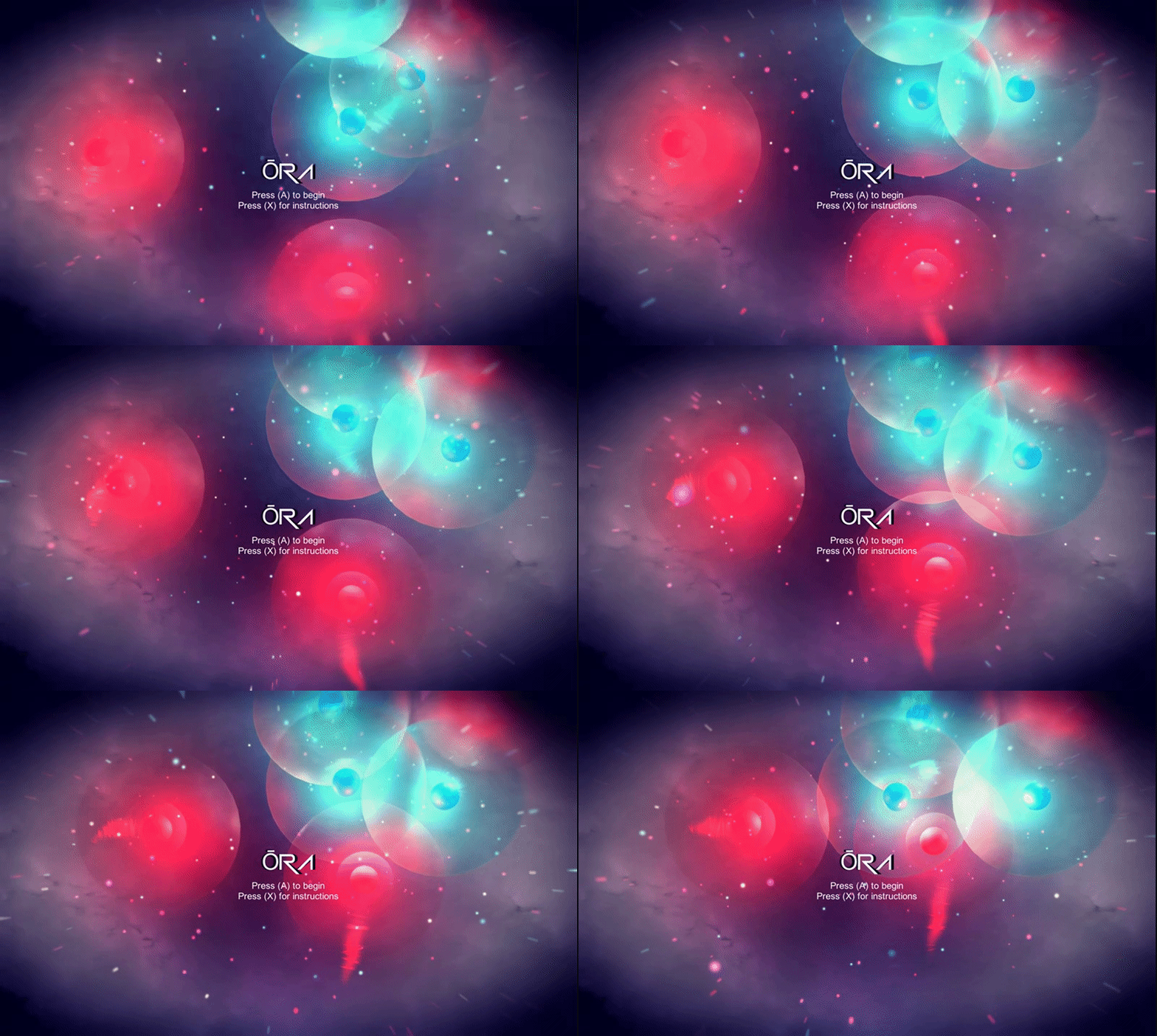
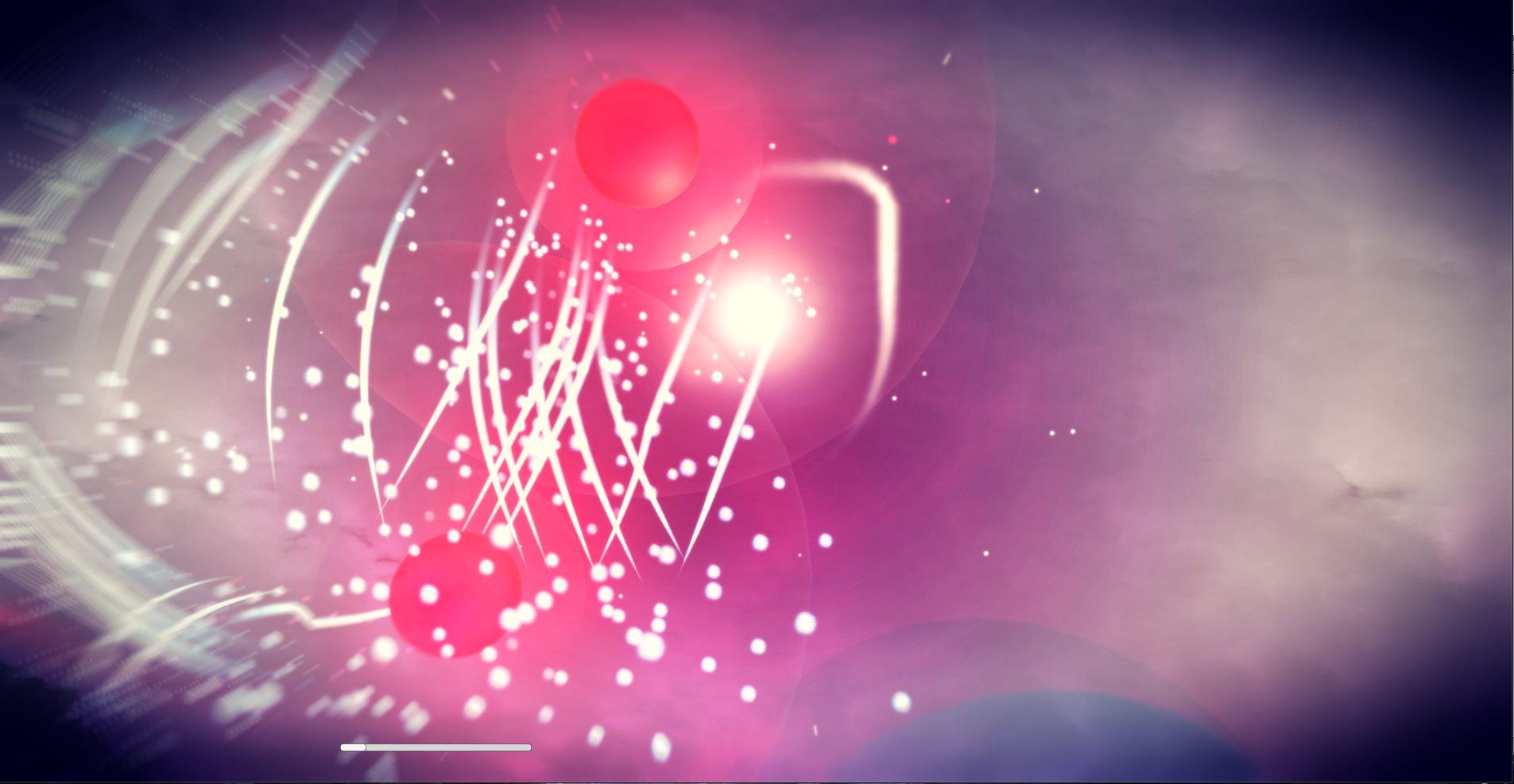
Players control a lone star drifting through an ethereal space. Energy is both your health and your resource. You emit sparks at the cost of your own energy to convert hostile red stars into blue ones. Blue stars restore your energy, but absorbing too much causes them to overheat and turn red, threatening you in return.
This creates a dynamic ecosystem built on balance, patience, and careful self-preservation. As IndieCade East described it: “A beautiful game about balance and conversion.”
Project Overview
The goal of Ōra was to build a game where mechanics emerged naturally from a single interconnected system, not from heavy rule design.
I aimed to create something:
Organic and reactive
Peaceful yet dangerous
Mechanically simple but behaviorally deep
Visually luminous and dreamlike
The final game is a systems-driven experience where every decision shifts the ecosystem around you.
Tools Used
Unity (C#) – systems programming, visual feedback, AI
Photoshop – sprites, textures, UI elements
Unity Particle System – sparks, trails, ambient visuals
Trello – three-week sprint planning
Itch.io – build hosting and public showcase
What I Worked On
Game Design & Systems
Designed the energy-as-health system, the core mechanic of the game
Built the conversion loop where red stars consume and blue stars restore
Created dynamic reactions where blue stars turn hostile when drained
Balanced risk vs reward around firing, dashing, and resource management
Designed the player’s environment as an ever-changing ecosystem
Art & Visual Design
Designed all star sprites, gradients, and environmental elements
Built luminous particle effects, sparks, and energy trails
Developed the soft color-shift system representing danger or calm
Designed the game’s minimalist UI and ethereal atmosphere
Audio Integration
Integrated ambient audio reinforcing the mood
Added spark, hit, and conversion sound effects
Mixed free assets to create a cohesive audio experience
Programming
Implemented all systems in Unity using C#
Coded energy emission, conversion, and transformation mechanics
Built AI logic for red and blue star behaviors
Scripted spark firing, movement, and the player’s dash
Created color-based state transitions and visual feedback loops
What I Learned
Ōra strengthened my understanding of:
Creating meaningful mechanics from simple systems
Using color, motion, and energy to communicate states without UI text
Designing emergent behavior through feedback loops
Balancing a game around resource tension instead of combat
Managing scope during ultra-short development cycles
Building a consistent aesthetic through light, color, and motion
It reinforced that small, focused projects can express powerful ideas.
Personal Reflection
Ōra reflects many of my natural design sensibilities: soft, atmospheric, and emotionally symbolic. Despite the short timeframe, I cared deeply about creating a space that felt gentle but dangerous, and a mechanic that rewarded mindfulness rather than aggression.
This was one of the first projects where I saw how much emotion and meaning could arise from energy exchange, color transitions, and movement, even without dialogue or text. The game’s interconnected system of giving and taking felt expressive in a way that exceeded its simplicity.
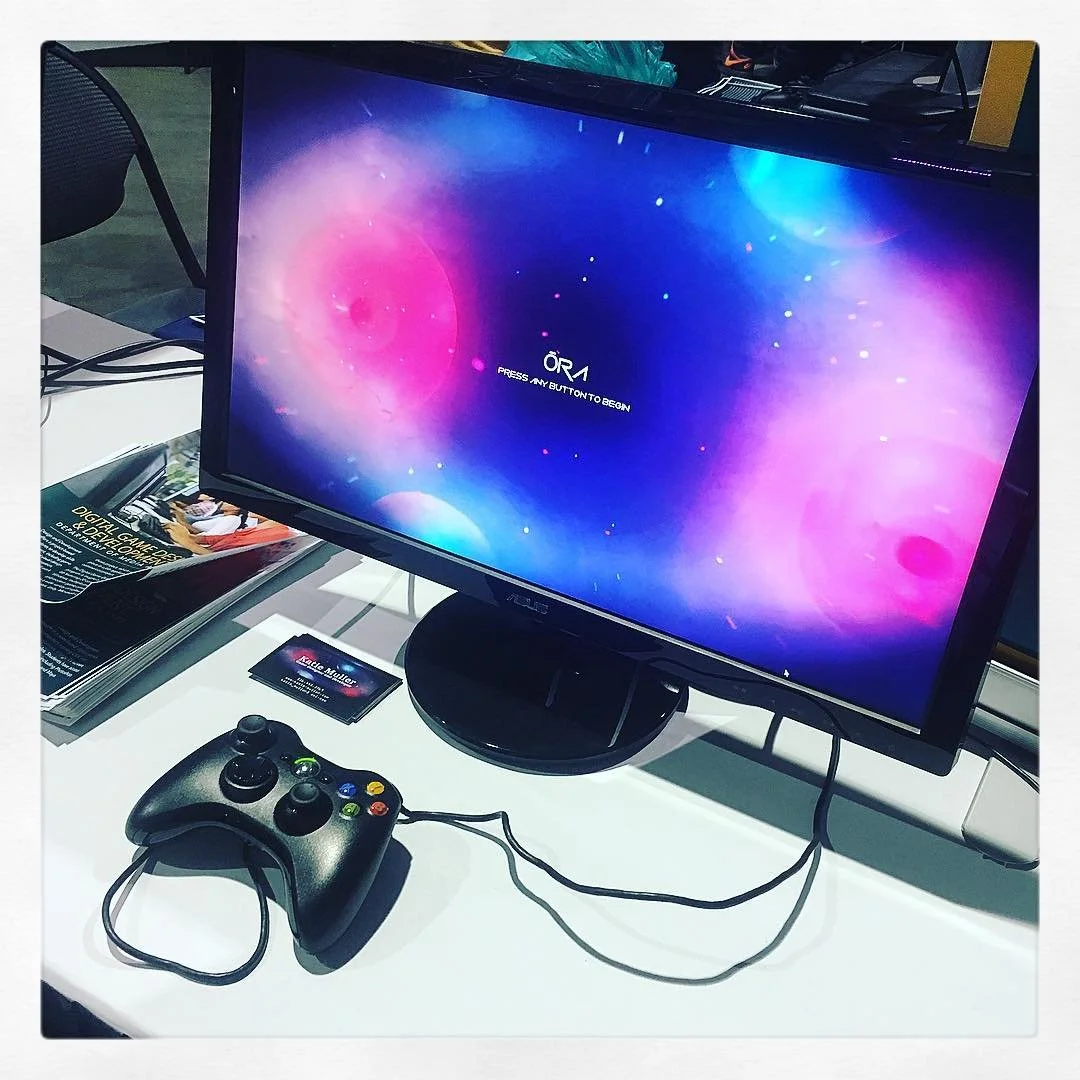
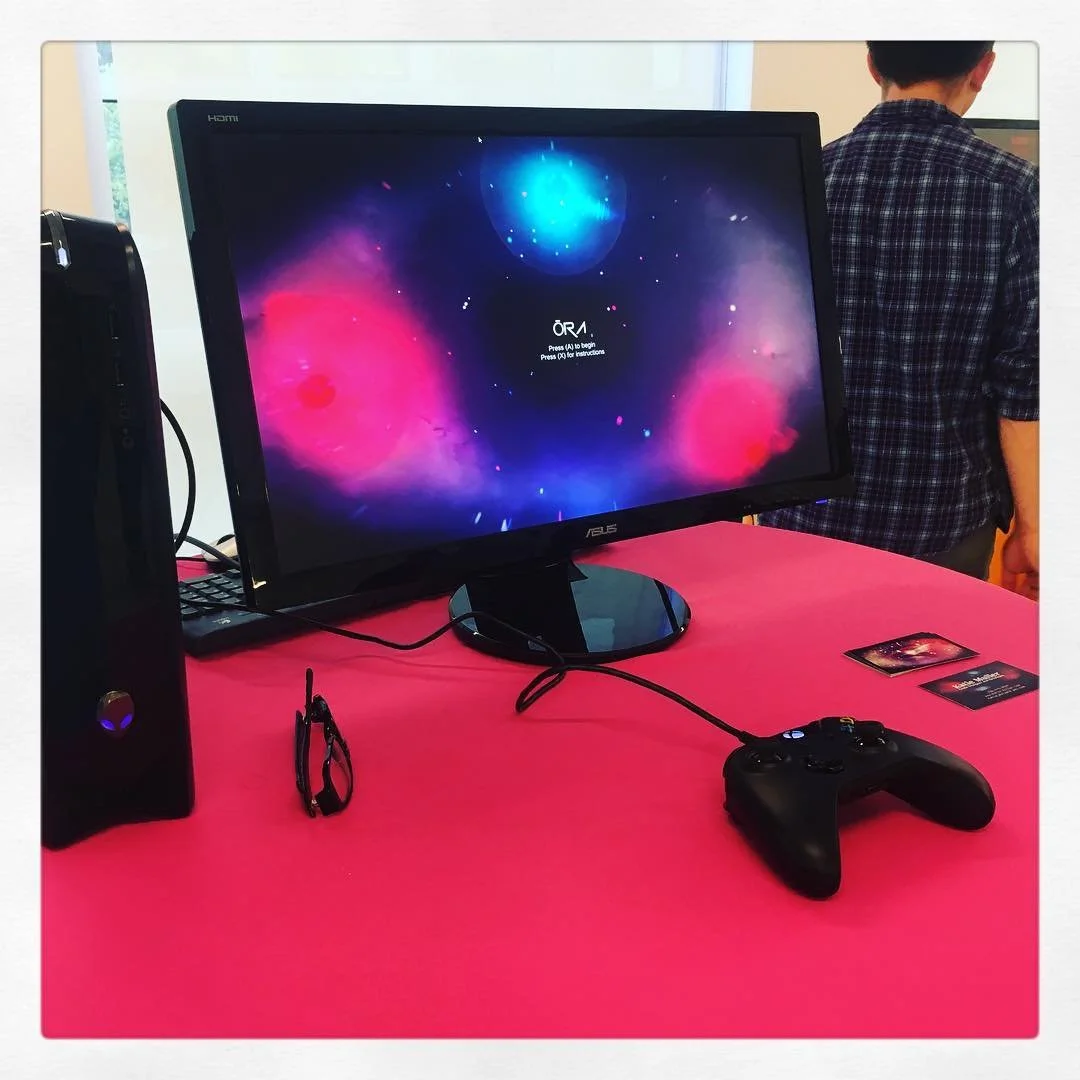
One of the most memorable parts of sharing Ōra publicly was seeing how many players were drawn to it purely because of the visuals. People often approached the booth at events simply because of the glowing colors, serene animations, and drifting energy effects. The atmosphere alone invited players in before the mechanics even began, which reaffirmed my belief in the power of visual storytelling and emotion-first design.
The game was showcased at several events, including the PAX East Student Showcase, the NYC Computer Science Fair, and IndieCade East, where it was described as “a beautiful game about balance and conversion.” These experiences showed me that the game resonated with a wide range of audiences — from students and developers to artists and industry professionals.
The project also caught the attention of the Lunar XPrize, which recognized its poetic approach to movement, space, and transformation. Knowing that the game connected across both artistic and scientific communities made the experience even more meaningful.
Ōra reminded me that even small, experimental games can resonate deeply when the systems are purposeful and cohesive. It taught me that simplicity, when designed with intention, can speak volumes.