Three Little Pigs (Analog)(2013)
Analog Game Design · System Design · Narrative Adaption
Summary
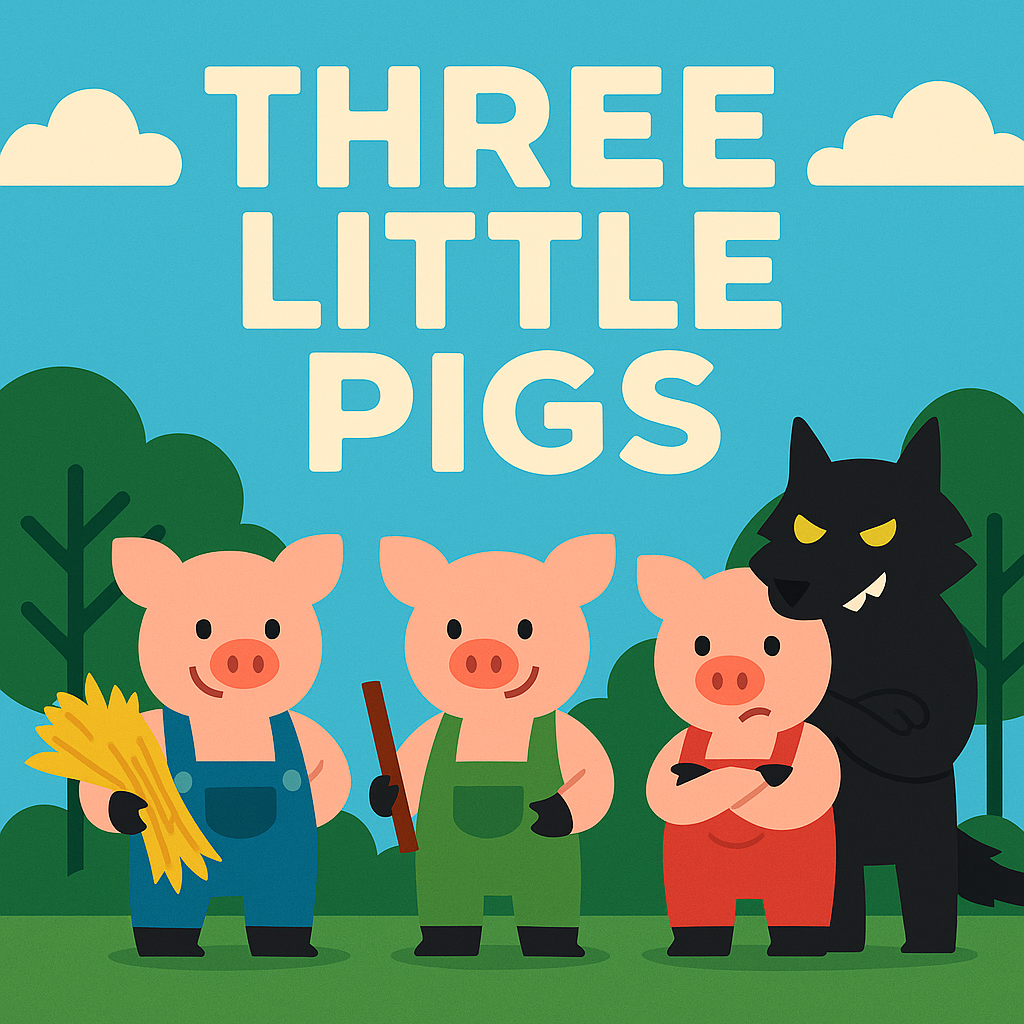
Three Little Pigs is a four-player asymmetric board game I created in 2013 during my early analog game design studies. At the time, I was discovering how much I loved translating stories into playable systems, and this project became one of my first attempts at adapting a classic fairy tale into a strategic, collaborative experience.
In this version, three players act as the pigs, gathering materials and working together to build a brick safehouse before the wolf finds them. The wolf player’s goal is to track down the pigs, destroy their incomplete homes, and capture them before they’re able to finish construction. The result is a tense, story-driven 3-versus-1 game where teamwork, clever resource management, and smart risk-taking determine who survives.
Although it was an early project, Three Little Pigs captures the beginnings of the design instincts that would shape my academic and professional path: asymmetric systems, narrative-mechanical integration, and games that emphasize tension and choice through simple, elegant rules.
Project Overview
I created Three Little Pigs for my undergraduate Introduction to Game Design class in 2013. In my retelling of the story, the pigs are still recovering from their first encounter with the wolf and must travel across a board representing grassland, forest, and mountain regions to gather resources. The wolf prowls the map, knocking down early houses, stealing materials, and capturing pigs who don’t work quickly enough.
Core Structure
Players: 3 pigs vs. 1 wolf
Pig Victory: Complete the brick house and all reach safety
Wolf Victory: Capture every pig before the house is finished
Mechanics: Action points, gathering, construction, asymmetric abilities, die-controlled outcomes
Tools Used
Paper prototyping
Physical board and token design
Writing, puzzle scripting, and diagramming
Manual playtesting with classmates
What I Worked On
Narrative & World Integration
Adapted The Three Little Pigs into a mechanical structure that emphasized cooperation, pressure, and escalating risk
Designed the map regions to reflect environmental storytelling and travel difficulty
Aligned narrative pacing with game progression to build tension naturally
Systems Design
Designed the action-point economy for pig players (movement, building, gathering, trading)
Built the wolf’s movement and attack system, including house destruction and capture rules
Balanced material types (straw, stick, brick) and introduced fences as optional protective structures
Authored probability tables for:
Gathering success rates
Wolf ability card acquisition
Pig escape attempts from the wolf’s lair
Asymmetry & Player Interaction
Built mechanics that encouraged pig players to cooperate and strategize together
Designed wolf abilities that reward smart positioning and map control
Created tension-filled routes and resource pathways that forced interesting decisions
What I Learned
This project helped me:
Build an asymmetric multiplayer system from scratch
Translate a well-known story into mechanical beats that reinforce theme
Use probability and pacing to shape emotional experience
Think about player psychology, risk, and teamwork
Create complete analog documentation including rulebooks, diagrams, and ability cards
Personal Reflection
Three Little Pigs was one of the earliest board games I ever designed, and one of my first real experiences witnessing players interact with something I created without guidance. Our class conducted blind playtesting, where classmates played my game using only the written rules — no verbal explanation from me. It was both nerve-wracking and incredibly eye-opening.
Watching players interpret (and sometimes misinterpret!) my rulebook taught me how critical clarity is in game instructions. I learned how easily a small ambiguity can derail gameplay, and how important it is to strike a balance between giving players enough information to feel confident while avoiding overly dense, intimidating text. This experience shaped how I write rules and tutorials even today.
It was also the first time I got to see my mechanics come alive through other people’s decisions, and it taught me invaluable lessons in game balance, pacing, and user experience. Seeing players strategize, exploit unexpected interactions, and respond emotionally to the wolf’s presence gave me an early understanding of how systems behave once they’re in the hands of real players.
Looking back, Three Little Pigs holds a special place in my heart as one of the projects that set the foundation for my approach to thoughtful, player-centric design.