Tronify
Game Design · Programming · Art · Iterative Development · Unity (C#)
Summary
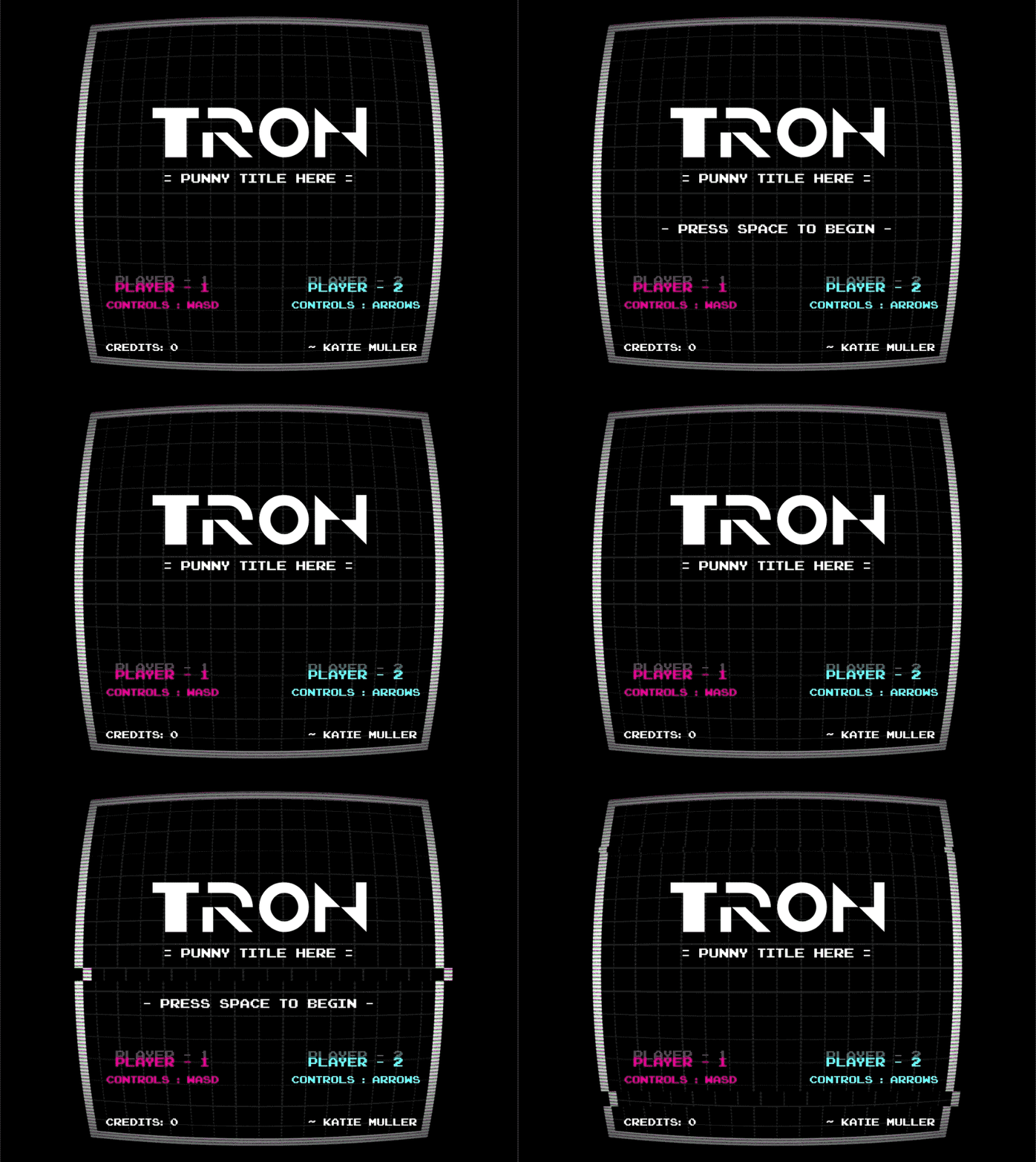
Tronify is a week-to-week iterative design project created during my Master’s program for a course on rapid game iteration. Inspired by Pippin Barr’s Pongs—a collection of 36 small, rule-changing variations on Pong—this project explores how altering a single mechanic can completely transform the play experience.
Following this philosophy, I selected Tron: Light Cycles as my base game and challenged myself to design and build a brand-new mechanical variation every single week. Each modification needed to feel meaningfully different while keeping the core essence of the original game intact.
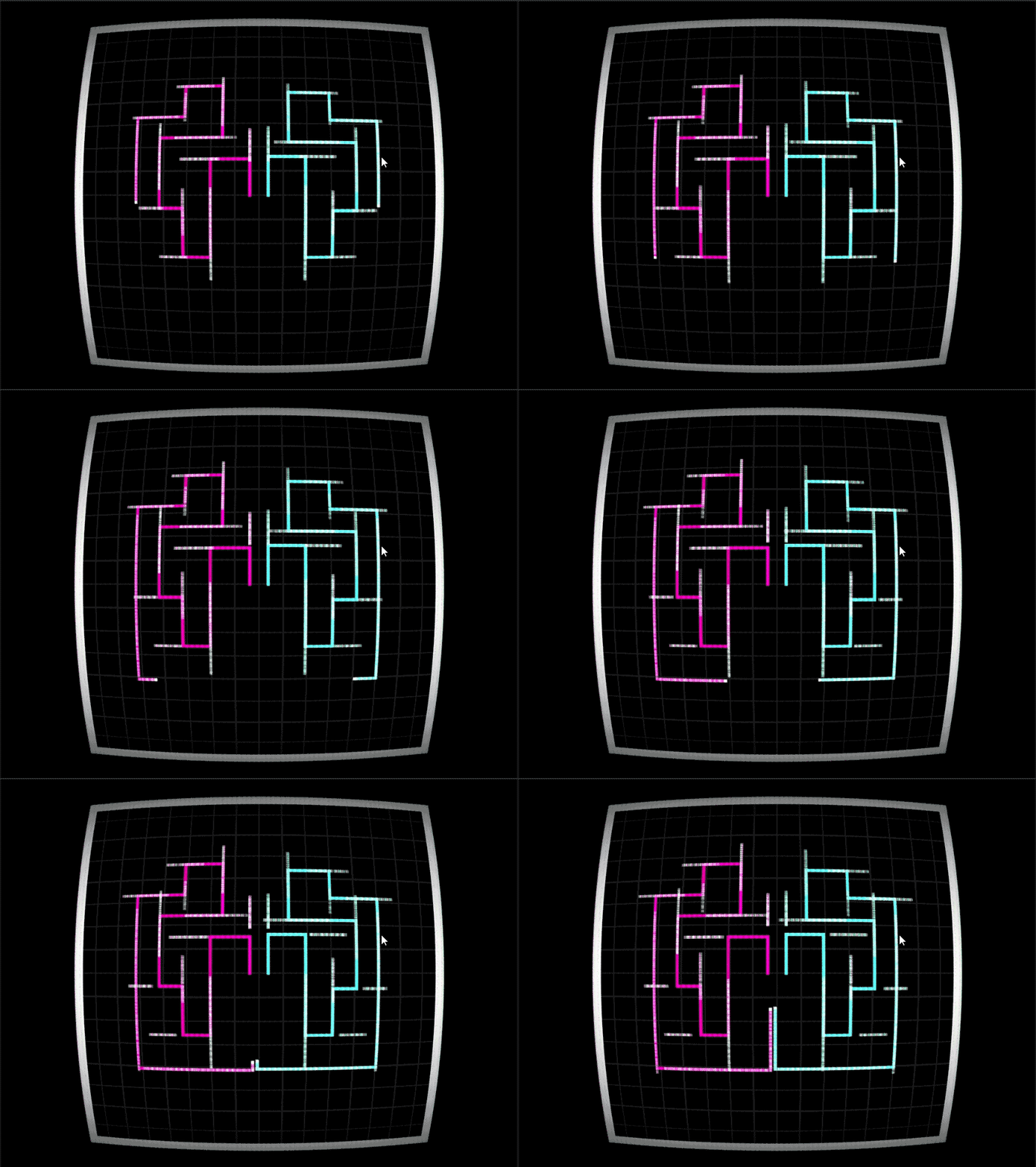
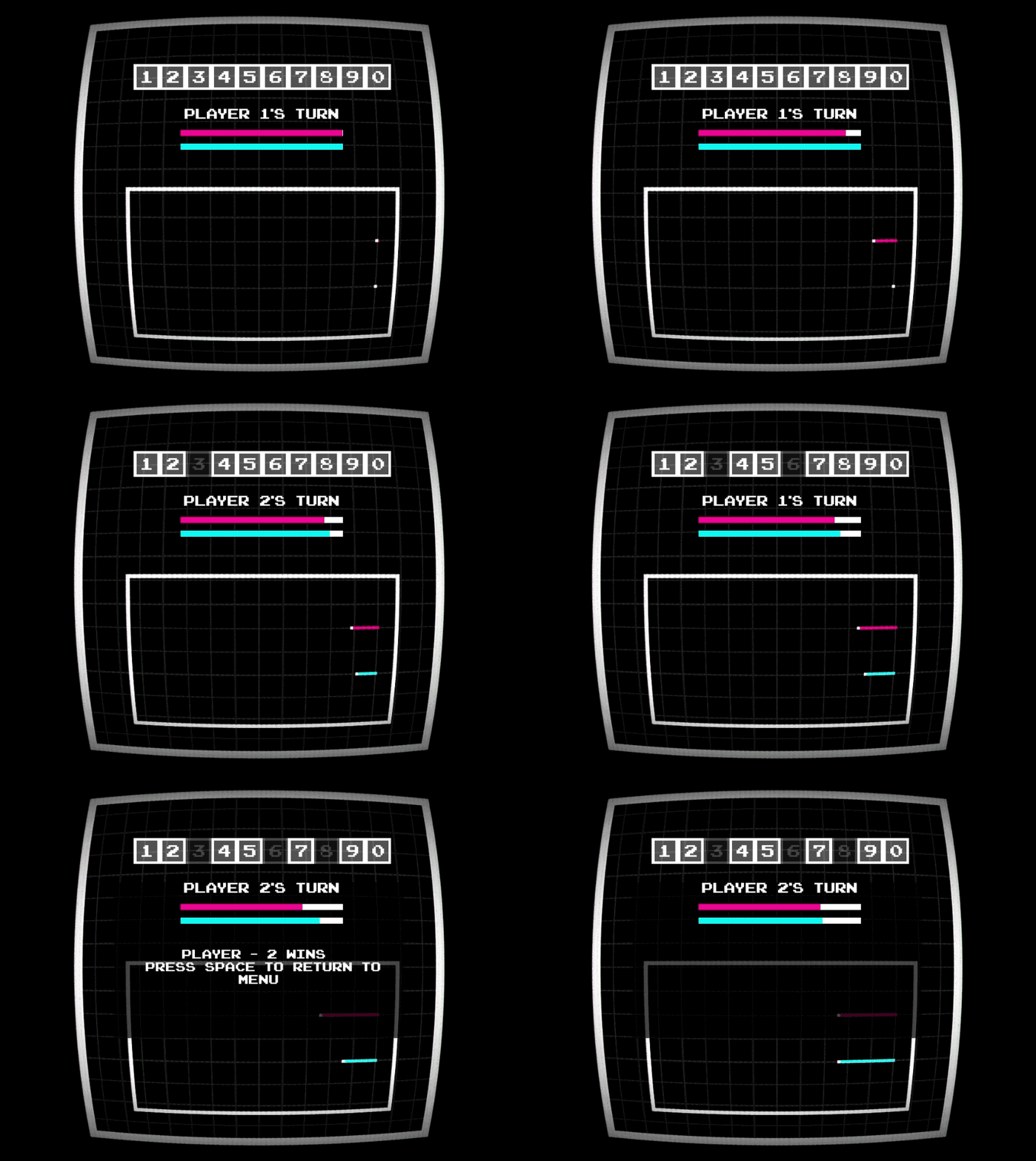
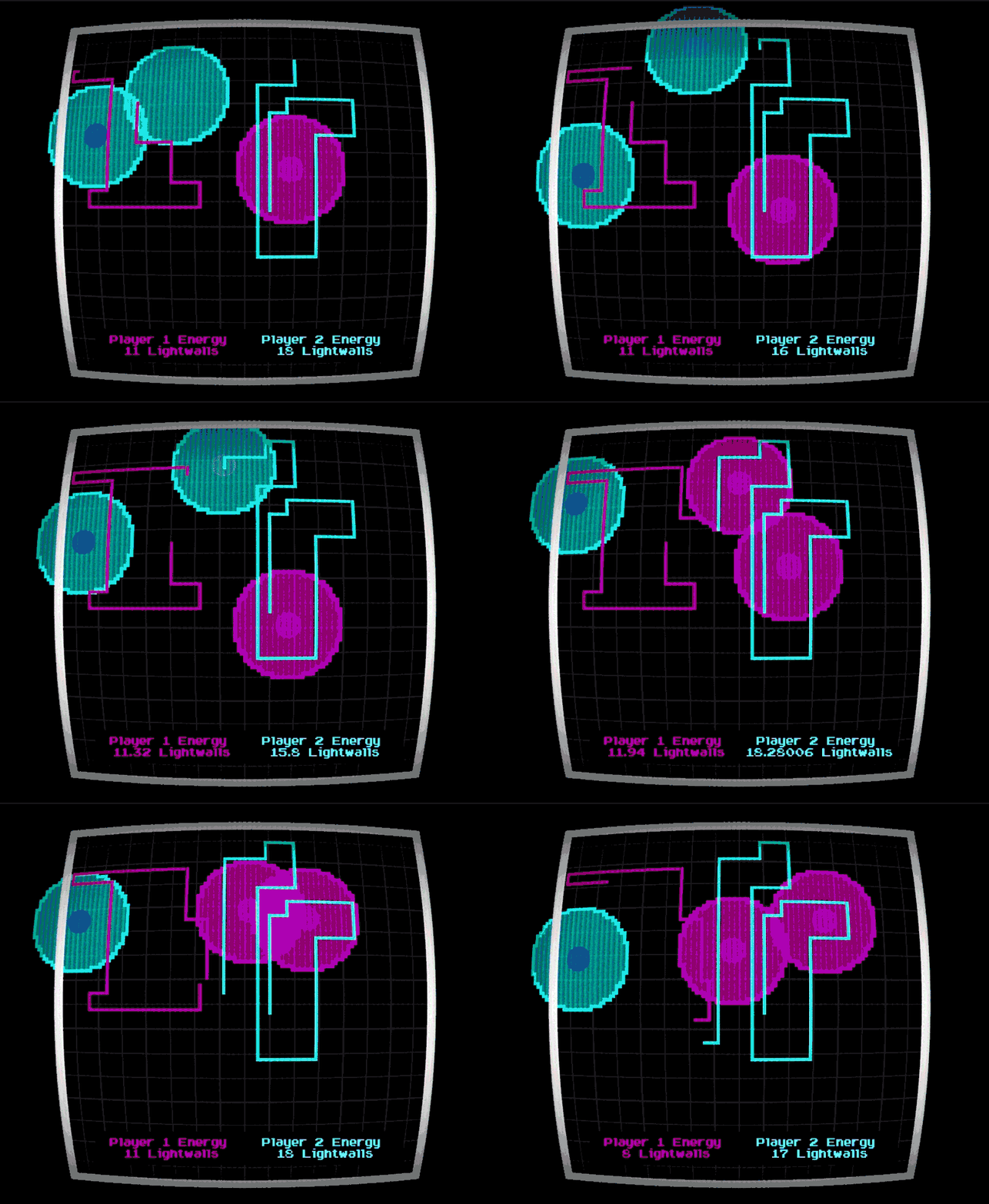
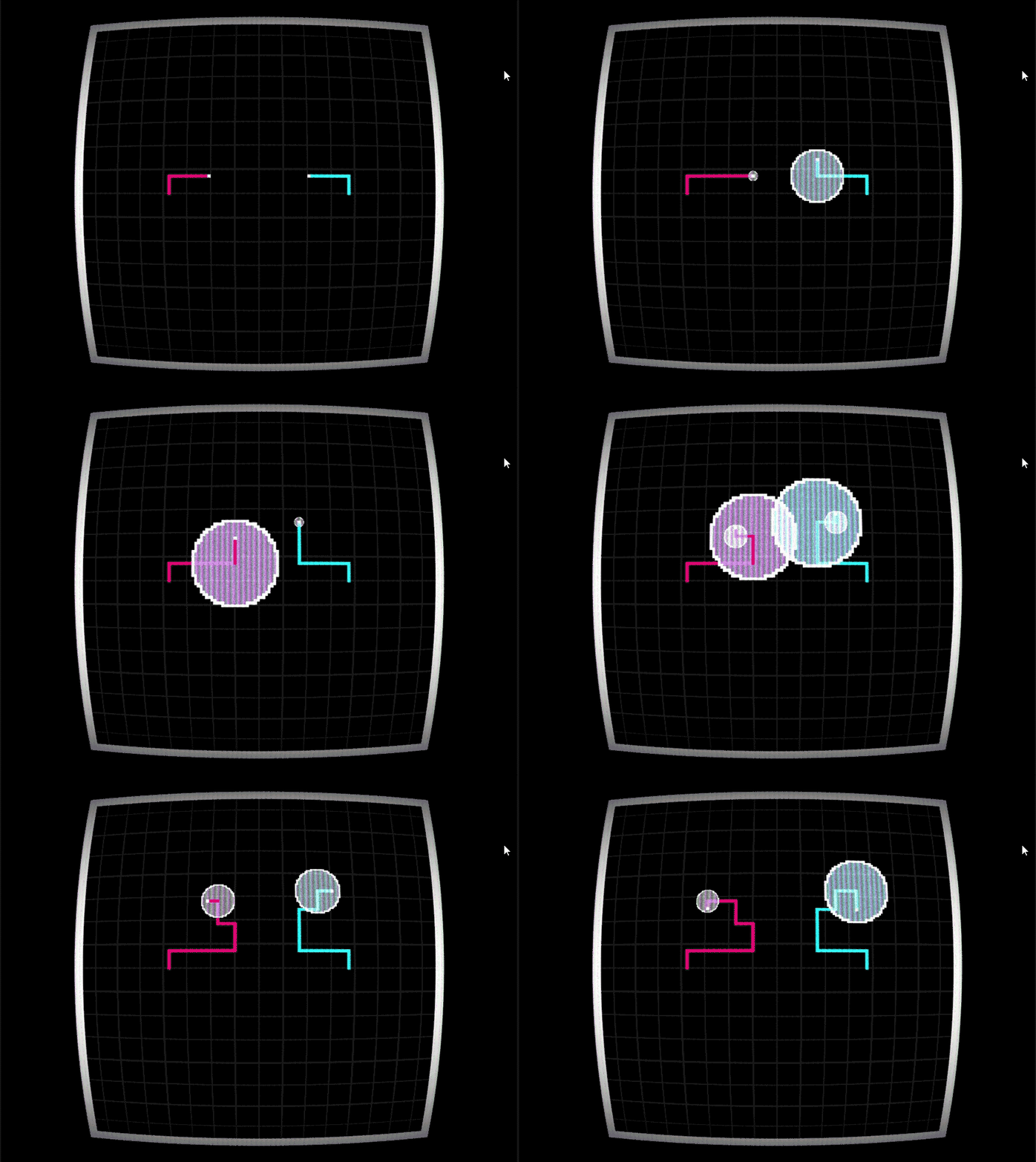
To date, Tronify includes seven variations, all designed, programmed, and illustrated by me using Unity and C#. Aside from audio assets, the entire project was created from scratch and served as a study in simplicity, iteration, and understanding how small rule changes can dramatically reshape gameplay.
Project Overview
Tronify was developed entirely in Unity (C#) as a rapid-iteration exercise, with the intention of learning how to:
Design small, focused mechanics
Build complete prototypes under strict weekly time limits
Explore the design impact of tiny rule variations
Reduce attachments to early ideas and avoid scope creep
Strengthen development discipline and speed
Each week, I conceptualized a new mechanic, created the artwork, implemented the logic, tested the prototype, and prepared it for class review—all within a seven-day cycle.
This process resulted in a collection of seven distinct Light Cycle variations, each exploring a unique rule twist, movement constraint, visual style, or behavioral change.
Tools Used
Unity (C#) – core development
Photoshop – sprites, iconography, visual polish
Balsamiq – quick paper-prototype sketching
Trello – weekly iteration planning
Git / SourceTree – small-scale version control
Free sound libraries – audio placeholder assets
What I Worked On
Design & Systems
Identified the base mechanics of Light Cycles and defined which elements to preserve
Conceptualized a new variation every week, each with a unique mechanical twist
Designed player movement constraints, speed logic, collision outcomes, and hazards
Created win/lose conditions, scoring logic, and escalating challenges
Prototyped variations such as:
altered turn speeds
rule-breaking traversal mechanics
visual distortions
lane-locking
pattern-driven enemy AI
map-shifting behaviors
Programming
Implemented all systems and mechanics in C#
Built movement, collision, and trail logic
Created new input variations based on changing rules
Implemented controls for multiplayer
Added game states, restart loops, and iteration selectors
Optimized weekly prototypes for predictable behavior and quick iteration cycles
Art & UI
Designed all visuals, including grid layouts, icons, sprites, trails, and UI
Created color palettes and screen effects for each variant
Set up layout compositions and HUD readability for rapid testing
What I Learned
This project strengthened my ability to:
Appreciate the design power of simple games and tightly scoped mechanics
Build and complete fully playable prototypes under fast weekly deadlines
Rapidly adapt and make decisions without becoming attached to early ideas
Reduce scope creep by focusing on mechanics rather than content
Understand how small rule changes can dramatically reshape gameplay
Build discipline in workflow, time management, and creative iteration
Personal Reflection
Tronify became one of the most important iteration exercises of my Master’s program. It pushed me to let go of perfectionism, make confident decisions quickly, and stay focused on delivering something complete every week. Developing seven polished variations in such a short time sharpened my design instincts and made me a far more flexible developer.
It also reminded me how much I enjoy working on small, simple games—projects where a single mechanic can carry an entire experience when designed thoughtfully. This class challenged me to trust my instincts, move faster, and grow more confident in my ability to build, test, and refine ideas without overthinking.
It remains one of the projects that most meaningfully improved my development speed, discipline, and design intuition.