Brave the Lonely
Narrative Design · Game Design · Programming · Research & Thesis Development · Solo Development
Summary
Brave the Lonely is a narrative-driven, turn-based strategy game created as my Master’s thesis. Built entirely as a solo developer, the project explores how player empathy toward game characters influences gameplay choices. Acting as a “one woman’s game team,” I designed, coded, illustrated, and implemented every element of the game, from emotional-state AI systems to world art, UI, narrative logic, and core gameplay loops.
In this story, the player uncovers an unfinished fantasy game filled with discarded, incomplete NPCs—characters who were never meant to be heroes. Abandoned by the game’s original creator (“The Player”), these characters have been left with flaws, fears, and unique emotional needs. When corruption begins to spread throughout the world, the responsibility falls on the real-world player to guide them… gently, if possible.
The game’s central tension lies between guiding characters and controlling them. Players can override a character’s autonomy to force them into actions, but doing so harms their happiness and trust. Characters who are unhappy stop listening, wander off, or refuse commands entirely.
Through this, the game asks: When empathy is made mechanically visible, how do players respond?
My thesis research demonstrated that when given the opportunity, most players altered their usual gameplay strategies to protect emotional well-being, even when it made the game more challenging. Very few players chose to coerce or “bully” characters, and many actively compensated to keep them happy.
This thesis project was recognized by the NYU Incubator (where I was a finalist) and later drew attention from the psychology department at my college, who expressed interest in expanding the concept to help teach children social and emotional skills.
Project Overview
Brave the Lonely was developed entirely in Unity (C#) and created through multiple research prototypes exploring emotional-state modeling, empathy-driven systems, and narrative reactivity.
Key components of the design include:
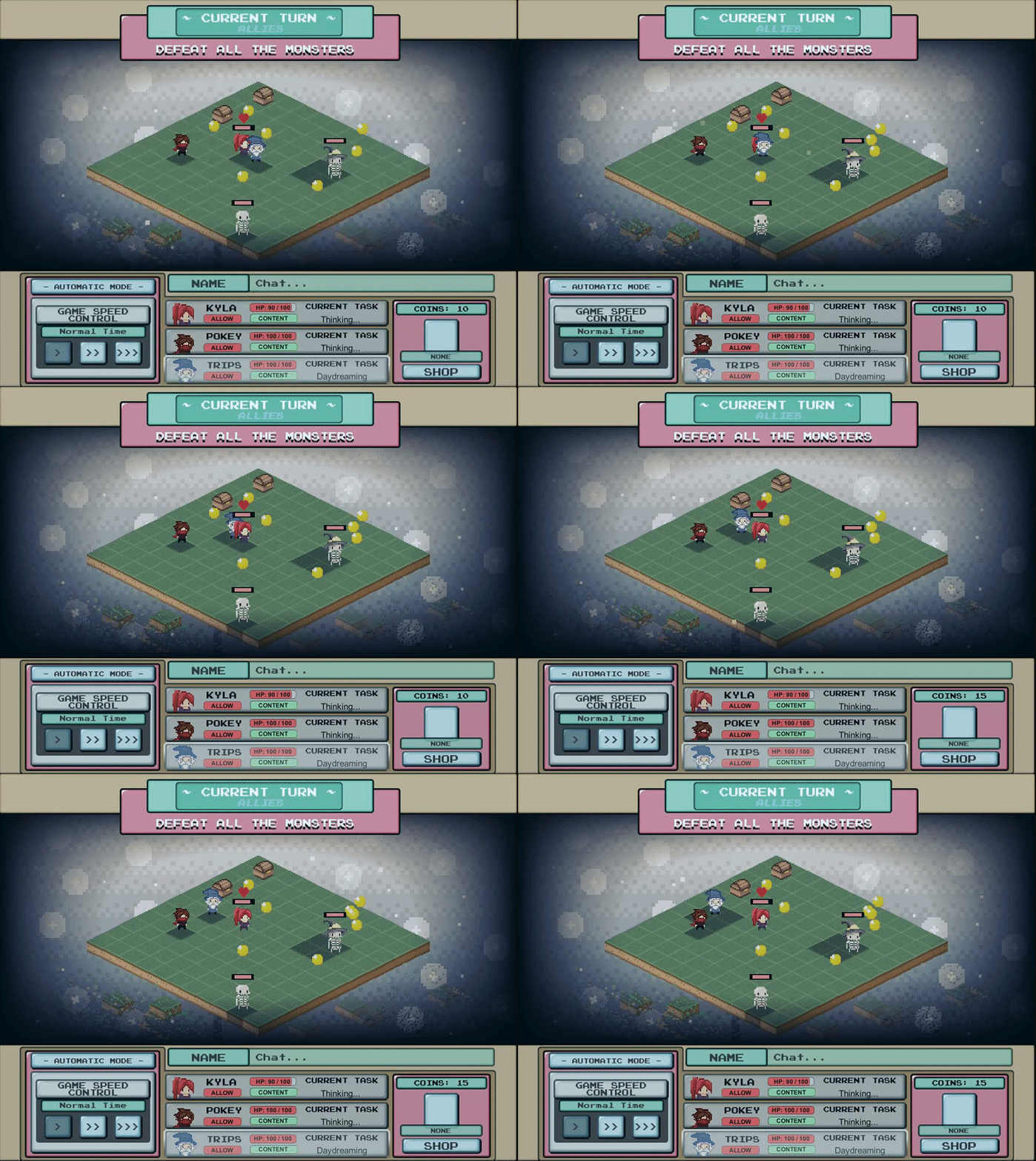
Turn-based strategy system with autonomous character movement
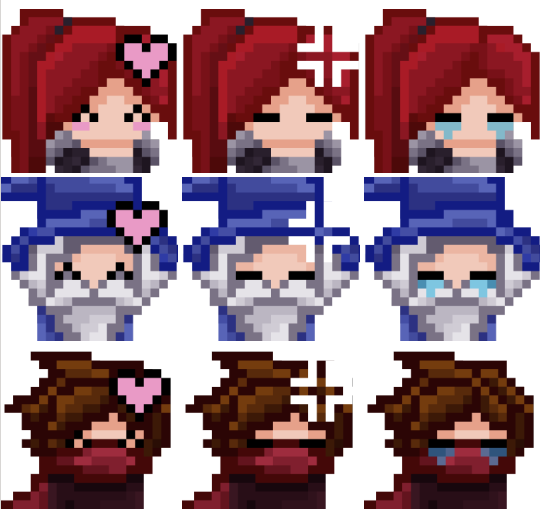
Emotional-state AI influencing a character’s willingness to follow commands
Isometric 2D world created with custom tiles, sprites, and animation frames
Narrative dialogue integration using external libraries and tools
Character profiles with desires, fears, traits, and personality-driven interactions
Player choice systems highlighting ethical and emotional decision-making
Corruption mechanic representing narrative decay and player responsibility
This project served as both a complete game and a formal research study, including player observation sessions, prototype iteration, and published findings in my department’s thesis archive.
Tools Used
Unity (C#) – full game development, AI programming, turn-based systems
Photoshop – character design, sprite art, backgrounds, VFX
Balsamiq – UI wireframes and early prototyping
Twine - Concepting and early player case studies
Trello – task tracking, milestone planning, production pipeline
Itch.io – distribution, version hosting
Tumbr - development logs
What I Worked On
Design & Worldbuilding
Created all game systems, rulesets, turn order operations, and UI/UX flows
Designed the isometric world, level layouts, and spatial encounter pacing
Developed character profiles (motives, fears, personality traits)
Designed dialogue trees, emotional arcs, and narrative branching
Implemented systems that balance autonomy vs. direct player control
Programming & Systems Development
Built the full game in Unity using C#
Coded all character and enemy AI, including emotional-state logic and trust meters
Implemented autonomous movement and decision-making behaviors
Created a turn-based combat system with initiative tracking
Integrated narrative dialogue libraries and customized them for the game’s needs
Implemented UI systems, menus, interaction prompts, and state feedback
Developed internal tools to assist with debugging and balancing
Art, Animation & UI
Illustrated every character, portrait, sprite sheet, tile, and effect
Created all world assets, environment tiles, and in-game VFX
Produced every animation frame (walk cycles, idle, attack, corruption, etc.)
Designed the full UI suite, including character cards, stats, prompts, and icons
Created brand identity, game logo, and all itch.io page artwork
Research & Thesis Work
Designed a multi-phase research study exploring empathy in gameplay
Built test prototypes examining emotional-state modeling and behavioral prediction
Conducted player observations to evaluate how empathy influenced their actions
Produced a written thesis analyzing results and game design implications
Presented project findings to faculty committees and industry peers
What I Learned
This project strengthened my ability to:
Build a full game independently from concept to polish
Develop robust emotional-state AI systems that impact gameplay
Blend narrative and mechanics in ways that encourage human connection
Use player research to inform and justify design decisions
Create efficient workflows as a solo developer using version control and task management
Design empathetic gameplay loops that require care, patience, and ethical decision-making
Communicate research findings across design, academic, and psychology audiences
It also solidified my confidence as a “one woman’s game team” and showed me that I could execute large-scale, multi-system projects on my own.
Personal Reflection
Brave the Lonely remains one of the most defining projects of my academic and early professional life. It was the first time I truly had to rely on myself as a developer — not just as an artist or designer — and the first time I built an entire game ecosystem entirely on my own. Learning how to program complex AI systems was an enormous challenge. I often stayed after class with my professors, working through problems line by line, slowly developing an understanding of how emotional-state logic, behavior trees, and turn-based decision systems could all weave together into a functioning whole.
It was difficult, humbling, and incredibly empowering. There was no one else to fall back on; if something broke, I had to fix it. That pressure strengthened my skills and confidence as a programmer in ways nothing else could have. For someone who originally entered game development through art and design, discovering that I could be a capable engineer was transformative.
Because I was interning at the time and my thesis schedule allowed only a single semester, I was never able to fully complete the project. I had four months to build a narrative system, emotional AI, turn-based combat, UI, art, animations, and all supporting tools from scratch — an impossible timeline by any standard. Even so, I poured everything I had into it. It is still the hardest I have ever worked on a single project.
Although the final thesis build wasn’t everything I dreamed of, the knowledge I gained from the experience was invaluable. It taught me systems thinking, emotional design, production discipline, and how to problem solve under pressure. It also introduced me to developers and industry groups who believed in the project’s potential and encouraged me to continue exploring the relationship between player empathy and game behavior.
Brave the Lonely is still a world and system I hope to revisit one day. It represents a moment when I proved to myself that I could take on something impossibly large, fight through it, and come out the other side as a far stronger developer than when I began.