To Where the Rails Take Us (2015)
Interactive Narrative · Twine · Writing & Game Design · 2015
Summary
To Where the Rails Take Us is an interactive narrative game I created in 2015 using Twine. It is an adaptation of a short story I wrote for my Advanced Creative Writing course, where my work was critiqued by a full class of English Writing majors. For this project, I transformed the story into a branching, choice-driven experience that allowed players to influence pacing, emotional tension, and character decisions.
The game follows Jayden, a young woman attempting to escape her authoritarian city by boarding a forbidden outbound train — a journey that forces her to face danger, fear, and the unknown. By converting my linear short story into a nonlinear format, I explored how player agency reshapes narrative tone and immersion.
Project Overview
This project began as a traditional short story written for a fourth-year English Writing seminar. The assignment required multiple rounds of critique — both spoken and written — which helped refine the voice, structure, and emotional beats before I adapted it for Twine.
For the Twine version, I:
Reconstructed the story into a choice-driven narrative flow
Added branching options that allow players to explore the environment, act impulsively, or hesitate
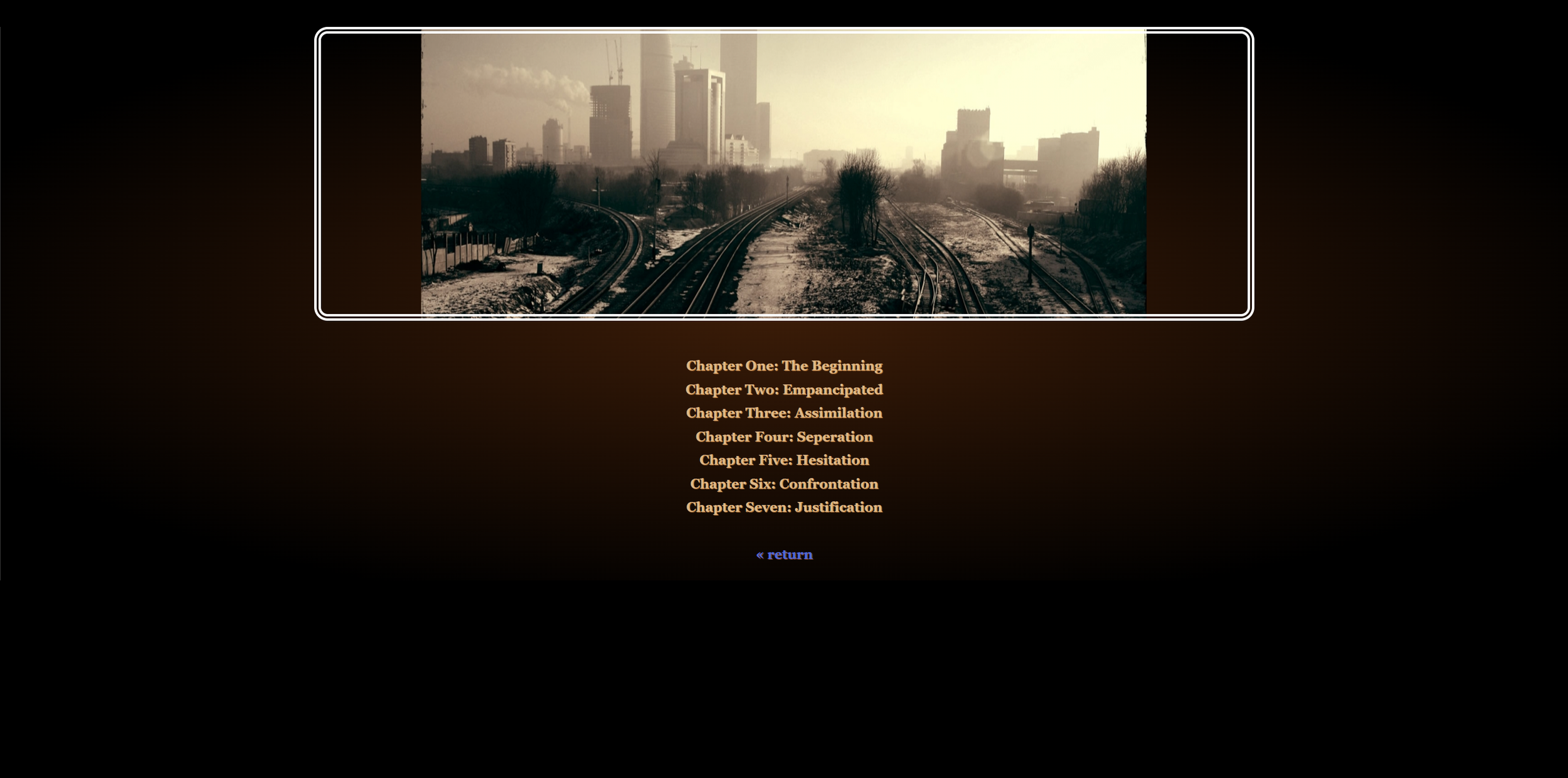
Used imagery and tone to emphasize the quiet tension of the post-apocalyptic world
Enhanced player perspective by writing in a close third-person style
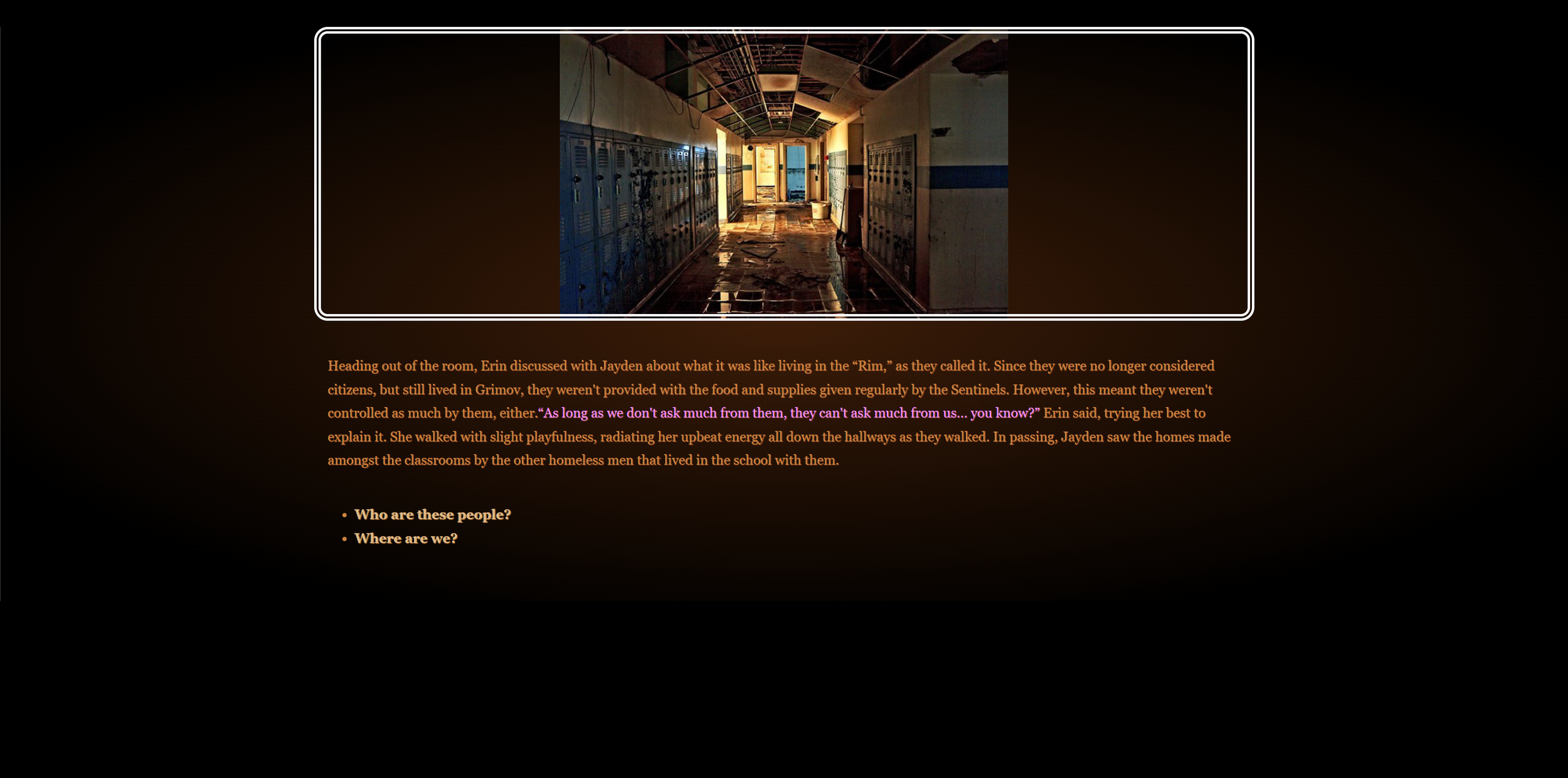
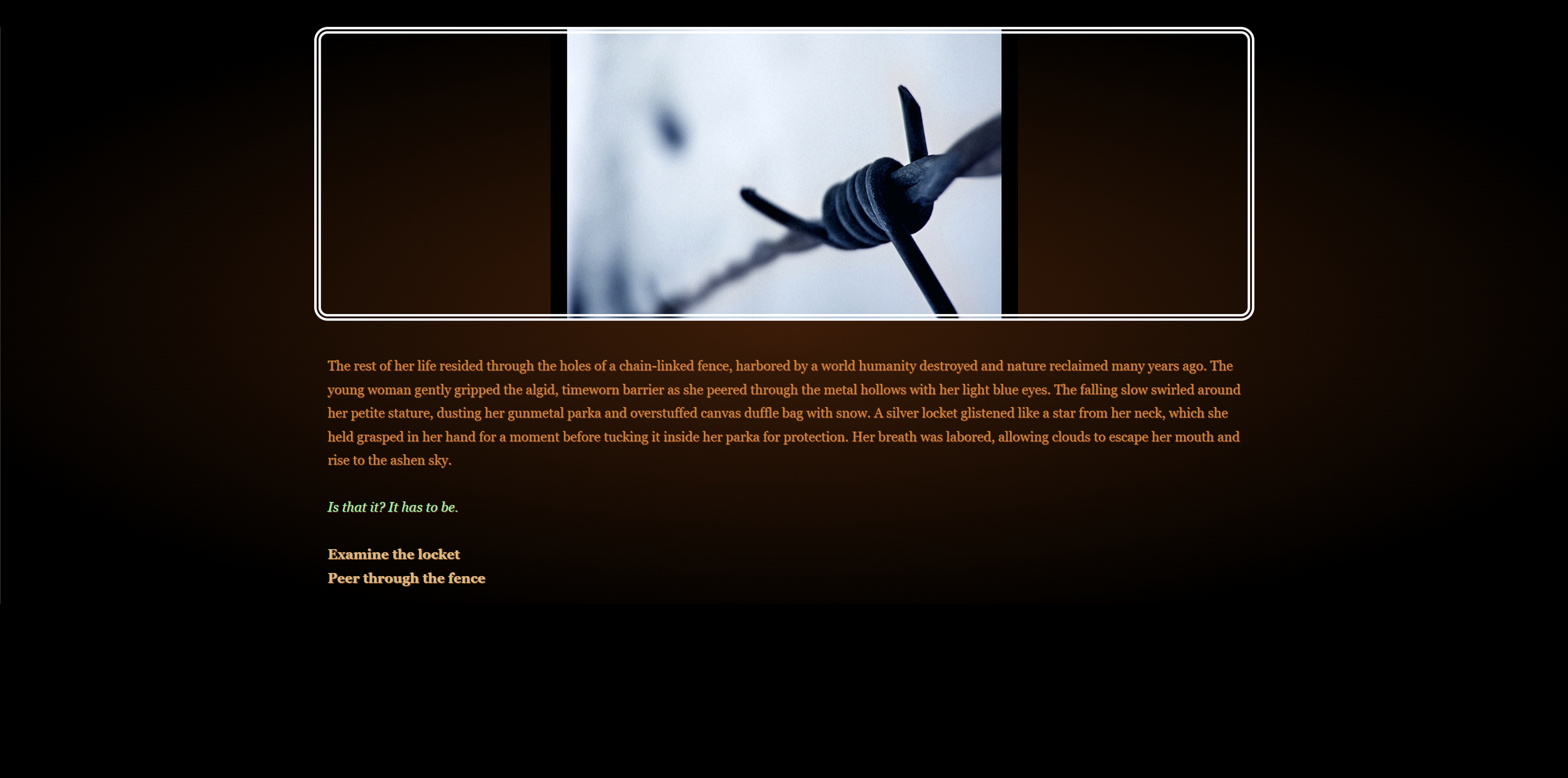
Incorporated visual elements to reinforce mood, such as stark photography, barbed wire imagery, and bleak landscapes
This was my first time using Twine, and it helped me understand how pacing, visual presentation, and player choice can dramatically impact the emotional weight of a story.
Tools Used
Twine
Microsoft Word
What I Worked On
For To Where the Rails Take Us, I created a fully interactive narrative experience in Twine, adapting a short story I originally wrote for my Advanced Creative Writing course. My contributions included:
Narrative Adaptation & Writing
Adapted my original prose into an interactive branching narrative while preserving the tone, voice, and atmosphere of the written story.
Designed multiple narrative paths, choices, and outcomes, ensuring each decision felt meaningful and emotionally grounded.
Revised and expanded scenes to better suit interactive pacing, adding decision points that deepen tension, world-building, and player empathy.
Interactive Fiction Design
Structured the story into Twine nodes, organizing chapters, dialogue, and branching logic to guide players through a cohesive emotional arc.
Incorporated choice-driven mechanics that let players direct the protagonist’s escape attempt while balancing narrative momentum with exploration.
Designed UI text styling, choice formatting, and transitions to enhance readability and immersion.
Visual & Thematic Presentation
Selected and integrated evocative imagery to reflect the bleak, dystopian environment and emotional stakes of the narrative.
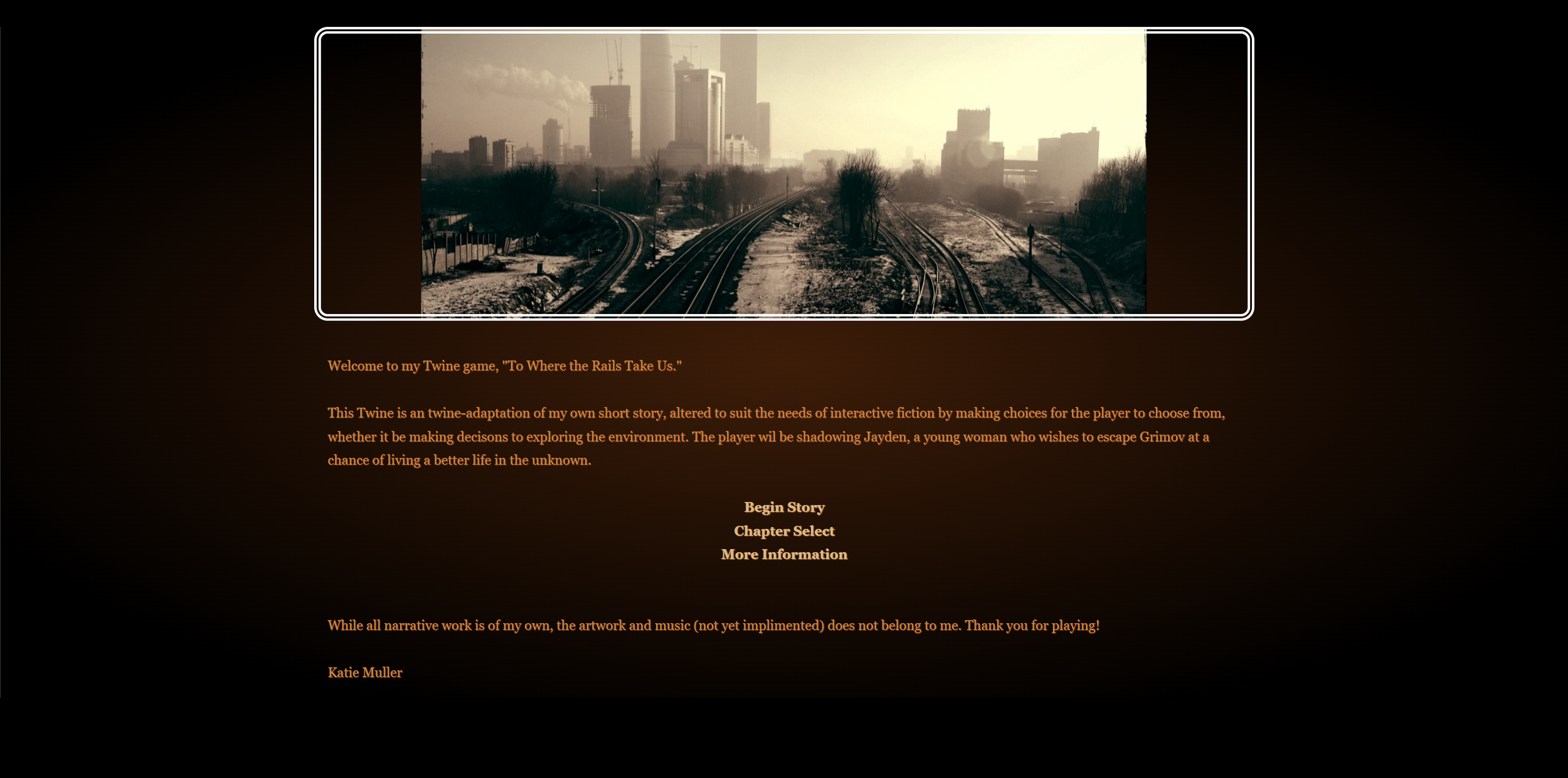
Styled the Twine interface—including backgrounds, borders, colors, and text hierarchy—to reinforce the story’s tone and atmosphere.
Editing & Narrative Craft
Revised the original manuscript based on workshop critiques from a 25-student, fourth-year writing course.
Strengthened prose, clarified character motivation, and heightened visual and emotional beats for interactive presentation.
What I Learned
Creating this Twine game helped me:
Translate a linear written narrative into a branching, interactive structure
Learn the fundamentals of interactive fiction and decision-based storytelling
Experiment with pacing and scene transitions using player agency
Understand how even small choices can shape a reader's emotional experience
Use environmental imagery and UI styling to enhance immersion
Value the importance of clarity when writing choice-driven narrative passages
It also strengthened my confidence in merging my writing background with game development tools, forming the foundation for future narrative design work.
Personal Reflection
This project holds a special place in my heart because it represents the moment when my two academic worlds — creative writing and game design — finally merged. Adapting a story I had painstakingly revised in a rigorous writing workshop into an interactive experience felt exciting and deeply personal.
It encouraged me to think differently about storytelling:
How does tension change when the player decides whether Jayden hides or runs?
How does fear feel when the narrative’s pace is no longer fixed, but reactive?
This project made me realize how strongly I wanted narrative design to be part of my future. It gave me confidence, both as a writer and as an emerging game designer, and remains a meaningful milestone in my creative journey.